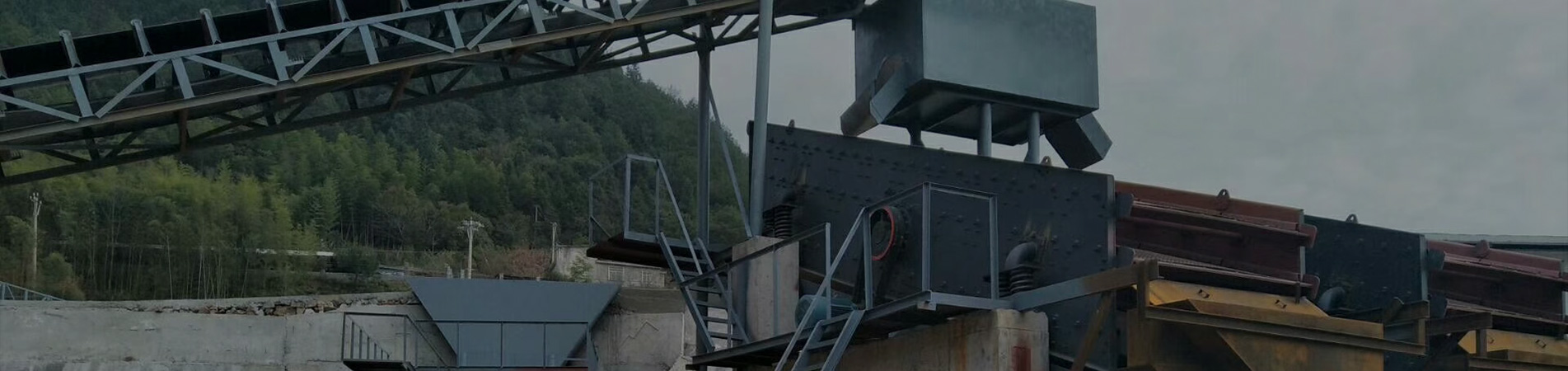
A crusher is a piece of heavy machinery that uses mechanical force to break down large rocks, stones, or other hard materials into smaller, more manageable sizes. Its primary function is to reduce raw materials—such as granite, limestone, concrete, or ore—into fragments of specific sizes (known as aggregates), which can then be used in sectors such as construction, mining, road building, or recycling. A more detailed explanation of its functions follows:
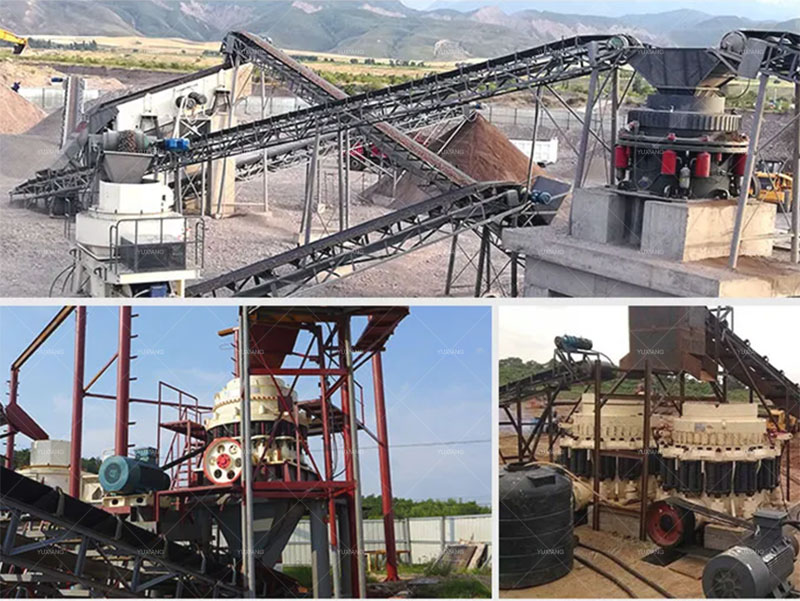
The Function of crusher:
Crushers employ one or more types of mechanical force to break down material:
● Compression: Two hard surfaces (such as jaw plates or cones) squeeze the rock until it fractures.
● Impact: A high-speed rotating rotor or hammer strikes the rock, shattering it.
● Attrition: Rocks rub against each other (or against machine surfaces), gradually wearing down into smaller fragments.
The choice of crushing force depends on the type of crusher and the hardness of the material—for instance, hard rock like granite typically requires compression crushing, whereas softer materials like limestone may be processed using impact crushing.
Key Types of Rock Crushers and Their Functions
Different crushers are designed for specific stages of material crushing (primary, secondary, or tertiary crushing):
1. Primary Crushing
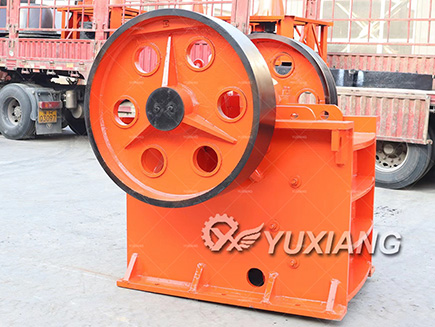
Jaw crushers are commonly used in the first stage of crushing. They operate on a principle similar to a bench vise: a movable jaw applies pressure to the rock, squeezing it against a stationary jaw and breaking it into smaller pieces. For example, in quarries, massive rock boulders several feet in diameter can be crushed into fragments measuring only a few inches.
Gyratory crushers are also used for primary crushing in certain applications. They feature a conical head that performs a gyratory motion (rotating around a central axis) within a stationary, bowl-shaped chamber. Rocks are crushed as they are compressed between the moving conical head and the stationary chamber wall.
2. Secondary and Tertiary Crushing
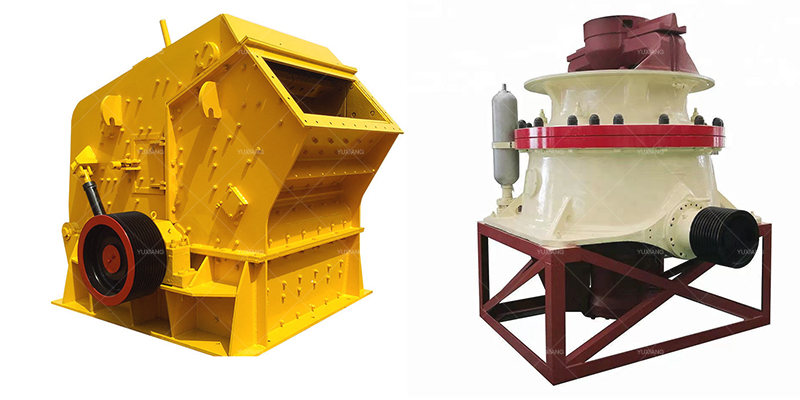
Cone crushers are typically used in secondary and tertiary crushing stages. They operate by crushing rock through the compressive action between an eccentrically rotating conical mantle and a stationary concave liner, thereby further reducing the size of rock fragments. Depending on the crusher settings, the output material can range from gravel-sized particles to fine, sand-like grains.
Impact crushers represent another option. They operate by using a high-speed rotor equipped with hammers to strike the rock and subsequently hurl it against impact plates, shattering it into smaller particles. Impact crushers are well-suited for producing cubical-shaped material, which is highly desirable for certain construction applications, such as the production of concrete aggregates.
3. Purpose of Crushing
Crushed stone has a wide range of applications. In the construction industry, it is used as aggregate for concrete and asphalt. Crushed stone of various sizes is carefully screened and proportioned to ensure that these construction materials meet the required performance specifications. For instance, larger-sized crushed stone (approximately 1 to 2 inches) can serve as road base material, while finer crushed stone (less than 0.5 inches) can be used as a component of concrete mixtures.
In the mining industry, rock crushers are used to extract valuable minerals from ore. By crushing the ore into smaller fragments, it becomes easier to separate useful minerals from waste rock using processes such as flotation or magnetic separation. If you are interested in crusher, please contact me.