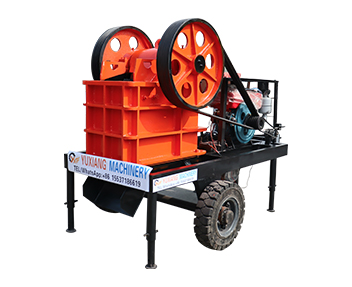
During assembly, the crushing plate must be securely fitted against the jaw plate, ensuring a flat, even interface; a soft metal shim (such as lead or zinc) should be placed between them, and the assembly must be fastened tightly with bolts. During operation, the crushing plate must not become loose; otherwise, it is prone to breakage or accelerated wear, which reduces its service life. Therefore, proper installation is essential to maximize the plate’s longevity.
Operational improvements can also extend the service life of the crushing plate. During production, the plate interacts directly with the material and is subjected to immense crushing forces—particularly when processing hard materials. This stress can cause bolt vibration and nut loosening, leading to accelerated wear and excessive noise; in severe cases, the plate may detach or break, causing equipment downtime and disrupting production. Simply tightening the bolts and nuts before startup does not provide a permanent solution; instead, specific issues must be analyzed based on actual site conditions to devise practical remedies. For instance, a spring-based anti-loosening and vibration-damping device can be employed to prevent the plate from loosening during operation, thereby extending its service life and boosting efficiency. This device consists of an inner spring cap, a spring, and an outer spring cap; it is installed over the bolt before the nut is tightened. Once the nut compresses the spring to the required level, a strong vibration-damping effect is generated. The spring’s tension automatically compensates for the loosening forces caused by the massive crushing impact, preventing the bolt from coming loose. This extends the crushing plate’s service life and improves production efficiency. In summary, by addressing specific issues with tailored solutions during operation—preventing loosening, accelerated wear, and breakage—one can extend the service life of the crushing plate, reduce costs, and enhance overall work efficiency.